Freezing the Ice Blocks
In our joint orchestral composition Water, the percussionist plays an ice block—yes, an actual block of ice—by rhythmically scraping it with a lasagna spatula. Inside the ice block, there’s a hydrophone frozen in place. For those unfamiliar with the term, a hydrophone is an underwater microphone.
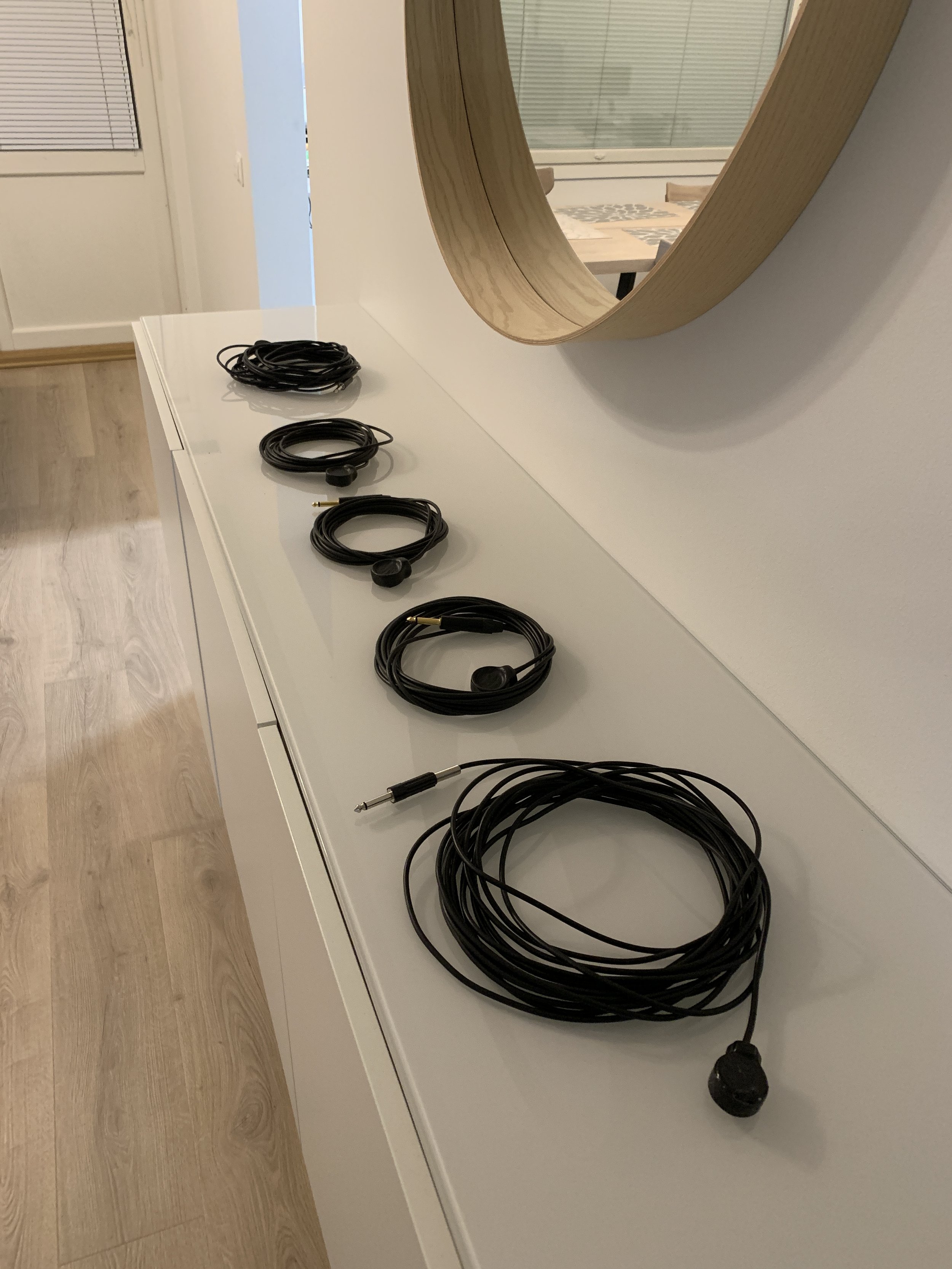
Now, how many ice blocks are needed for a week of rehearsals and performances? Let’s do the math. For every rehearsal and concert, it’s wise to have one ice block in use and another as backup. On Monday, there’s a technical rehearsal with the sound engineer and two percussionists. From Tuesday to Friday, there are daily rehearsals, and on Friday evening, the concert itself.
Freezing the hydrophones inside the ice blocks (in our own freezer at –18 °C) takes two full days. We currently have five hydrophones, four of which are intended for active use. The fifth one had a cracked casing, but our friendly sound engineer managed to repair it—it now serves as an emergency spare.
The Stages of Freezing a Hydrophone Inside an Ice Block
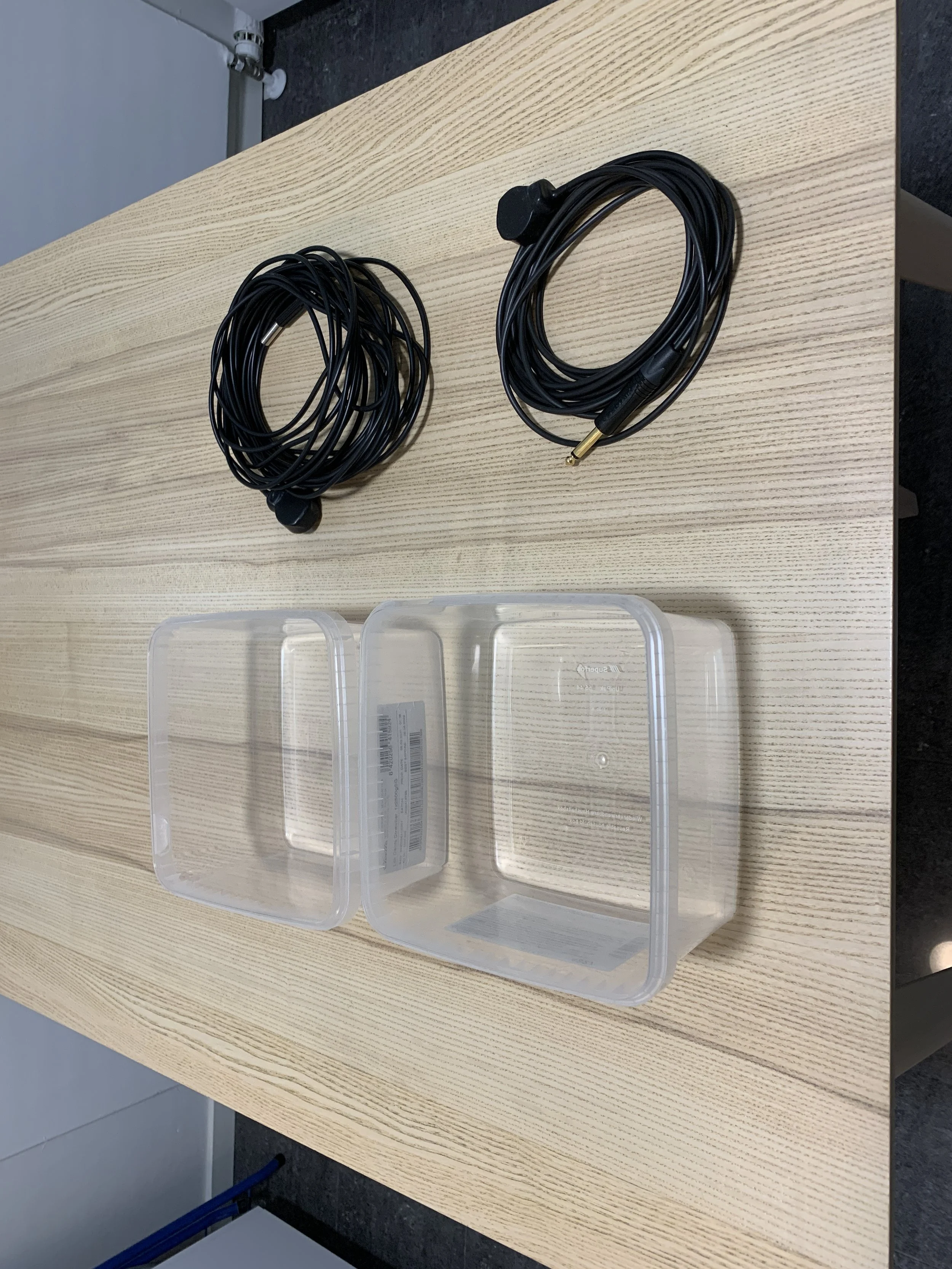
Fill a plastic container with water.
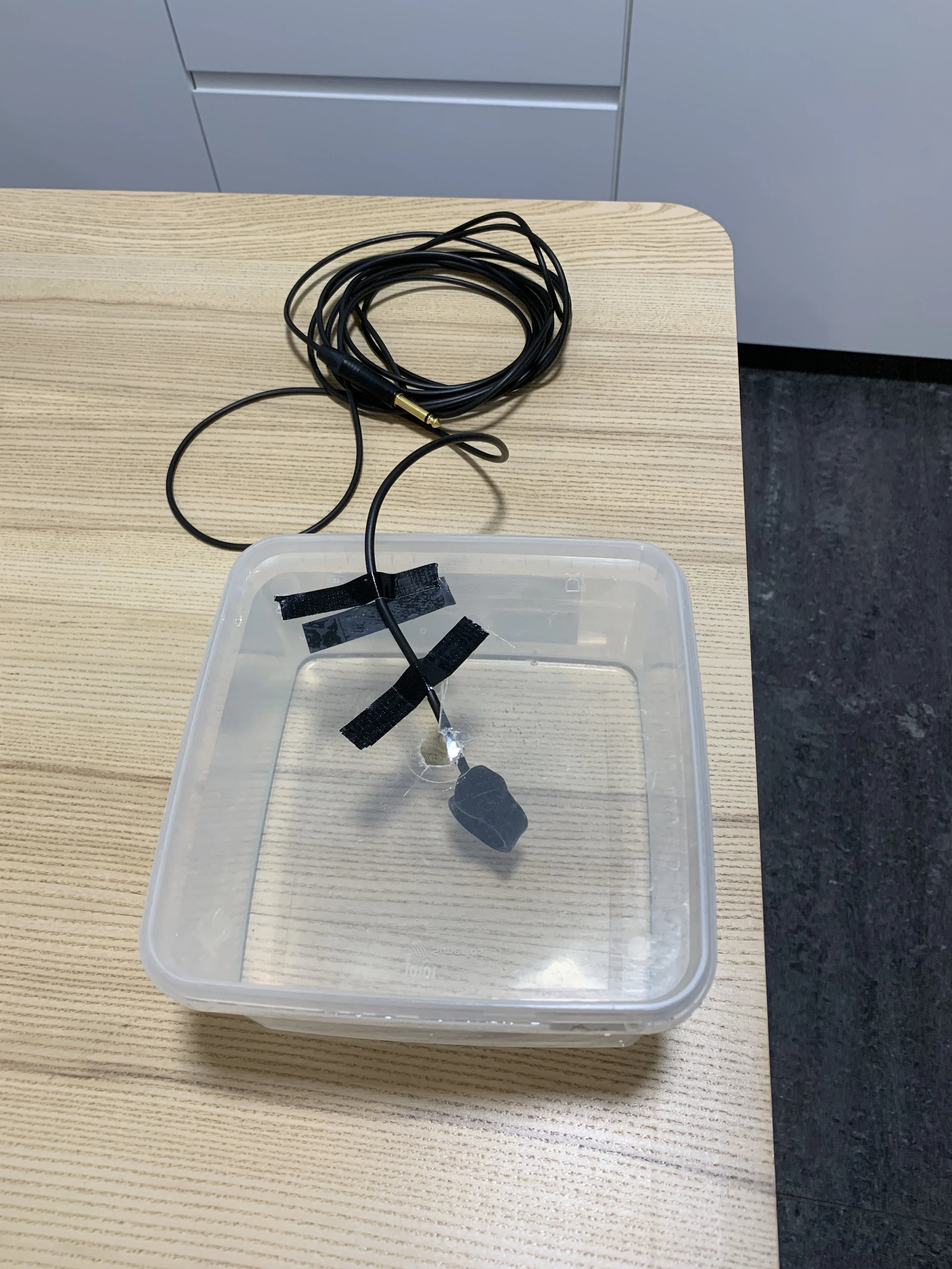
Drill a hole in the lid so that the hydrophone can be positioned in the center of the ice block.
Thread the hydrophone through the lid and tape it carefully in place so it stays centered. This step requires a bit of finesse—the hydrophone tends to wander!
Place it in the freezer.
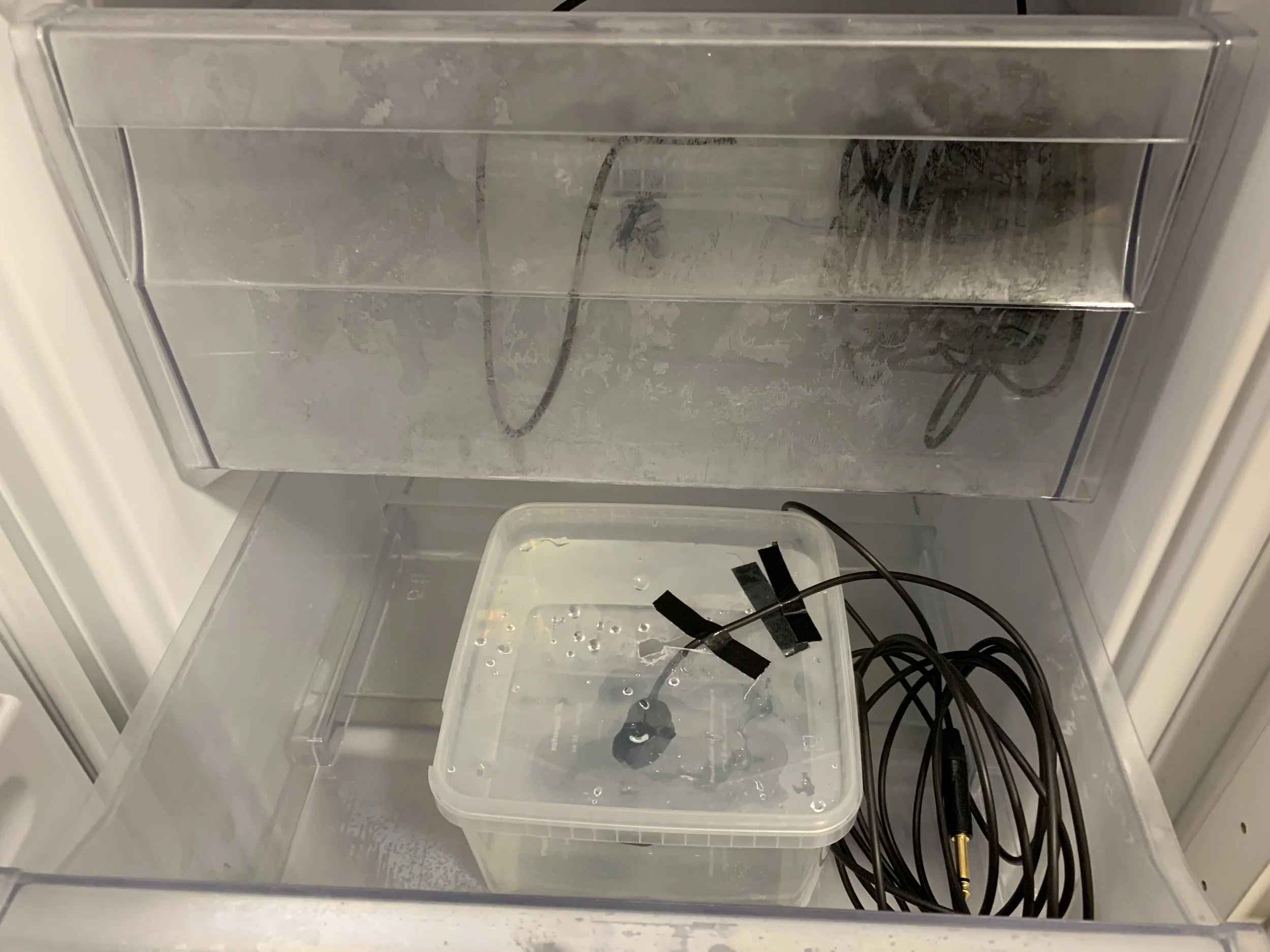
After a couple of nights in the cold—voilà!—your performance-ready ice block with a hydrophone inside is ready to go.
